100% Spanish Immersion Preschool and Private Kindergarten
A Spanish immersion preschool and private kindergarten in Wilmington, with two locations serving local families.
Plan a visitHow we see children
At Wilmington Bilingual Preschool, children learn in Spanish all day. Play time, circle time, eating and work time all happen in the language. We teach in 100% Spanish because immersion is the way children reach fluency. Early childhood is when the brain picks up language most easily. Children who learn in two languages often show strong analytical, social and academic skills in math, science and creativity.
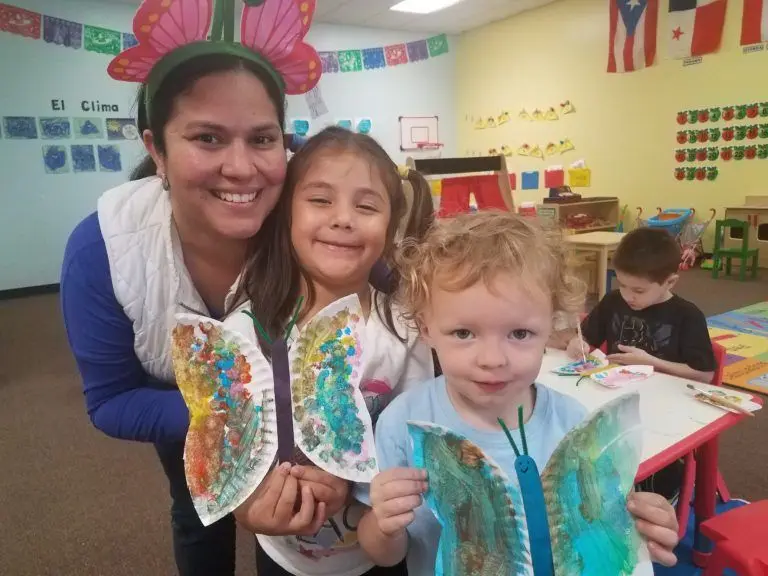
In the rooms, Spanish is the language of everything. A child builds with blocks and asks for another piece in Spanish. At the table, they pass food and name it. At circle, they sing and answer questions. Teachers are native or high-fluency Spanish speakers, so the words children hear are accurate and natural. Stories, art and songs carry the vocabulary through the day.
Every class is taught in 100% Spanish, including play time, circle time, eating and work time. All staff are native or high-fluency Spanish speakers. At least one staff member in each class is CPR and first-aid certified. All staff hold NC Division of Child Development background checks, fingerprinting and an approval letter.
What you notice in practice
Teachers get down at eye level and talk with children, not at them. When a child points at the shelf or reaches for a toy, a teacher names it in Spanish and waits for the child's answer. Small groups let children take turns and hear each other. The goal each day is a child who tries a word, then a phrase, then a sentence.
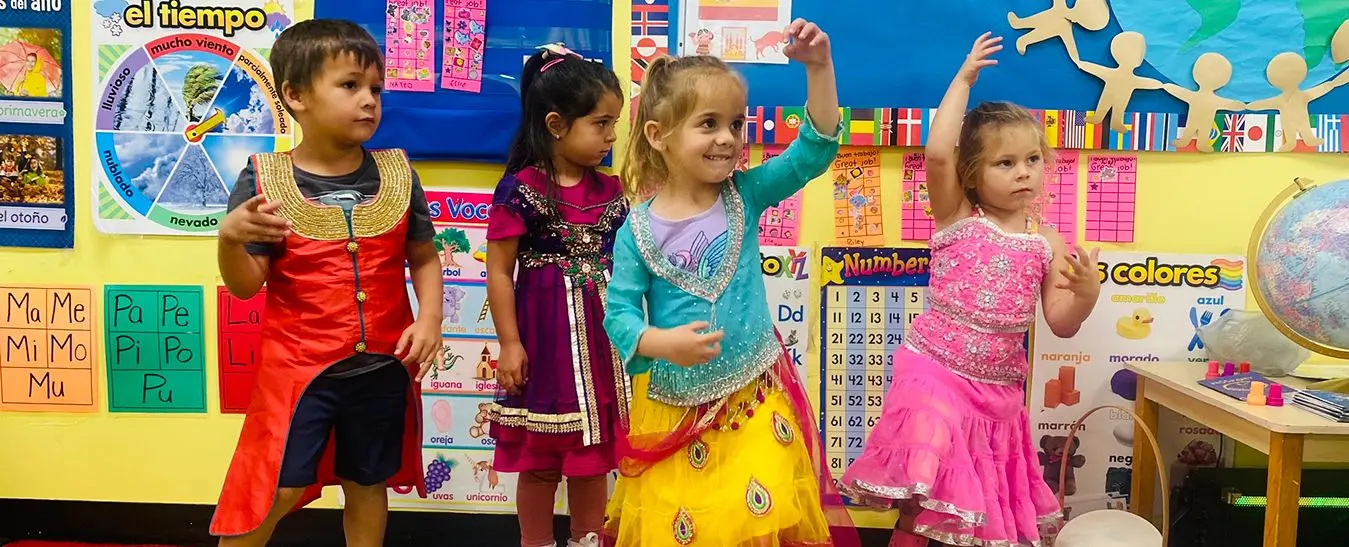
Rooms are set up so children can choose: a block corner, a book area, a table for art, a spot for pretend play. The day has a rhythm. Children gather, play, eat, rest and come back together. Transitions are announced in Spanish so children know what comes next. Materials sit at child height so small hands can reach them without help.
How we work with families
Parents tell us they hear about the day on the way home: songs, new words, art projects, friends. One parent said the director sends song playlists, book recommendations and photos of the children learning, all in Spanish. Another said her son's confidence in speaking Spanish grew a lot after he started. Teachers and the director answer questions in person at drop-off and pickup, and by message during the day.
During the first weeks, teachers watch how your child settles and share updates with you. The director sends song playlists, book recommendations and photos of the children learning. Ask your child's teacher how drop-off is going; ask the director anything else.